Scale
Sixteen views, from a galaxy down to the length where known physics stops.
The ten lowest views form the sim's Barrow Ladder. Each is an authored scene with its own units and camera, joined to its neighbour by a blend or a cut. The six views above them use free flight. Each rung gives the view width, basis tags and a link to the corresponding live scene.
At the bit rung, Erase takes an uncertain bit to a known state and reports its Landauer cost. Reverse exchanges the two states while preserving information. At the atom rung, an energy slider shows the Margolus-Levitin operation-rate ceiling. The separate mass-to-light, horizon and replication ladders are linked below.
The ladder is Barrow's: it ranks a civilization by the smallest thing it can control, and the lower rungs carry his levels, BI to BΩ. The Barrow and Kardashev page has the full argument and a toy that moves a civilization up both ladders. Kardashev's ladder runs the other way, in power, and the sim shows both side by side.
Every size comes from numbers.json or from the sim's rung data. Each picture says how to read it: the sim's own frames are depictions, and several of the lowest rungs are styled or illustrative, so none of them is a photograph.
1021 ma view 100,000 ly wide
The galaxy
The Milky Way is about 100,000 light-years across, and Vesper and Ember are one point in it. A civilization that used the output of a whole galaxy would be Type III on Kardashev's ladder, at 4 × 1037 W. The Vigil's goal is 1 × 10²⁰ W, far below that.
Why does the sim draw no galaxy?no math
The scale rail runs out to the galaxy so that a visitor can pull all the way back. Galaxy space in the sim is a stand-in made of background stars and two marks, and it does not show the Milky Way's structure.
1016 ma view 1 ly wide
One light-year
Light covers a light-year in a year. Sol is 28 light-years from Vesper, and the seed needed 280 years to cross it at 0.1 of the speed of light, as Pushed by light tells it. That gap is why the Vigil's fast link to Sol is a beam of light, and why bits travel and atoms do not.
A light-year is the distance light travels in one year, so a message across 28 light-years takes that many years, and a reply takes the same again. No design changes that delay, so the Vigil and Sol can exchange a question and an answer only over decades physics.Why is a light-year the unit here?no math
1011 ma view 1.5 AU wide
The system
Vesper and Ember circle each other at 1.5 AU, once every 188 days. The Vigil's machinery sits in five bands around the pair, called zones A to E. The sim shows the pair and the sky behind it.
Orbits decide where machinery can stay. Beyond 0.66 AU from Vesper, Ember's pull takes over, so bands around Vesper have to sit inside that limit physics. Where you can live around a hole and a star gives the integrated bounds, and the swarm and its zones says what each band does.Why are the zones where they are?no math
1011 ma view 0.3 AU wide
Zone C
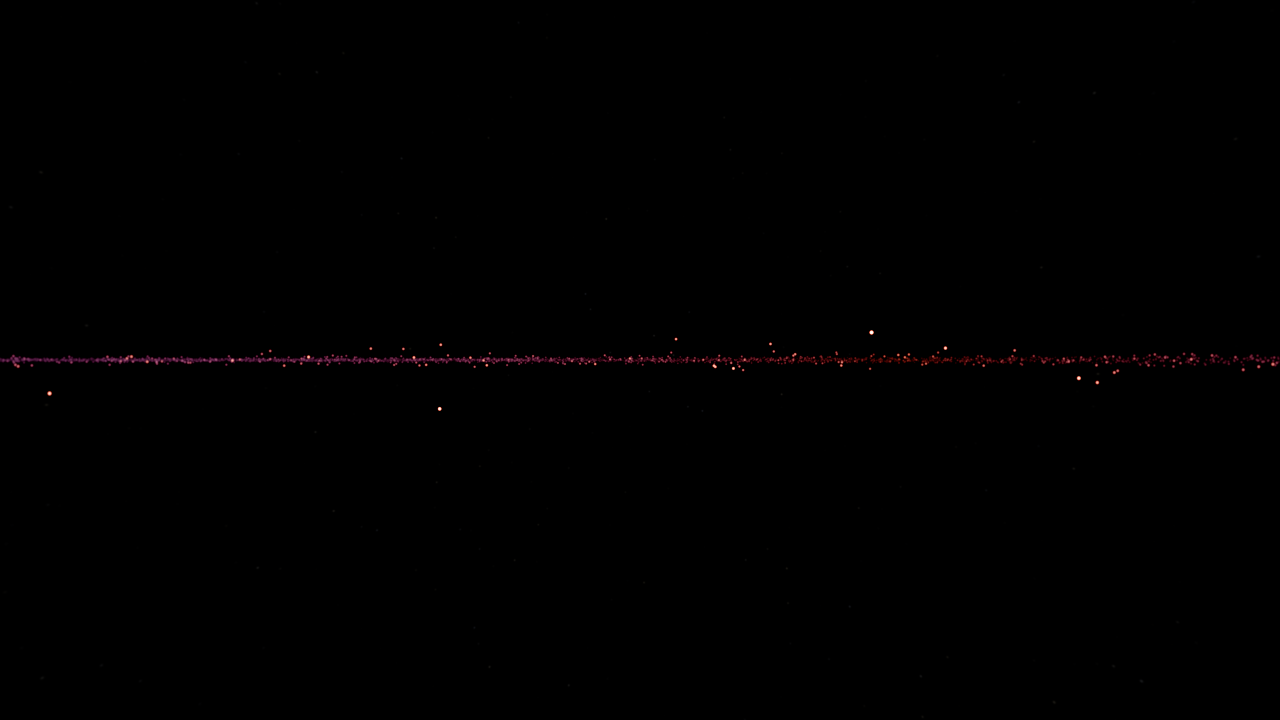
Zone C is where the computing nodes sit, between 50 and 200 light-seconds from Vesper. This view is as wide as the band is thick. A signal that crosses the whole zone, from one side of Vesper to the other, and comes back takes 13 minutes, so the nodes in it are too far apart to share a clock.
A clock tick is a signal, and a signal covers 30 cm in one tick of a 1 GHz clock. Past that distance the parts of a machine disagree about what time it is, so each node keeps its own time and the nodes talk by messages physics. Big minds are slow minds works out how that caps the size of one mind.Why can one clock not run a whole zone?no math
107 ma view 4,900 km wide
Kindling
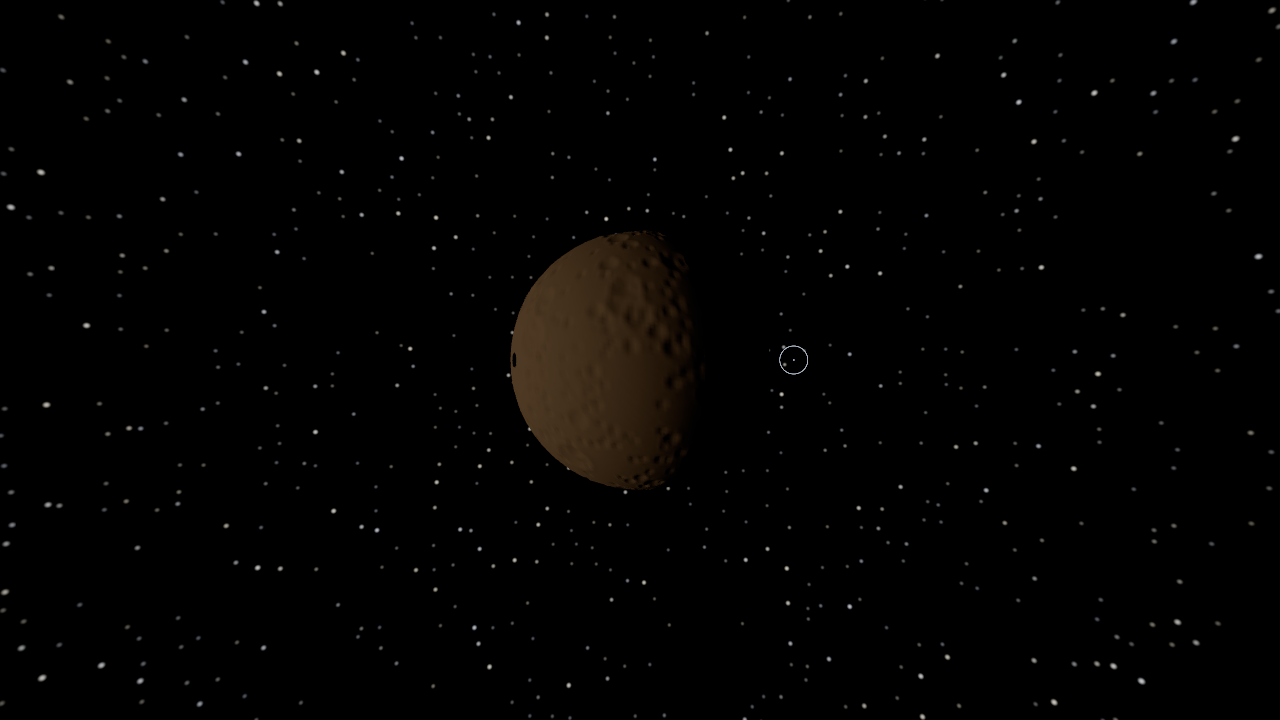
Kindling is the rocky world where the seed landed in 2453, about the size of Mercury, 2,439 km in radius. It circles Ember at 0.080 AU, with a year of 9.9 days fiction. It supplies the rock and metal the swarm is built from, and its own page tells how the doubling began there.
105 ma view 180 km wide
Vesper's shadow
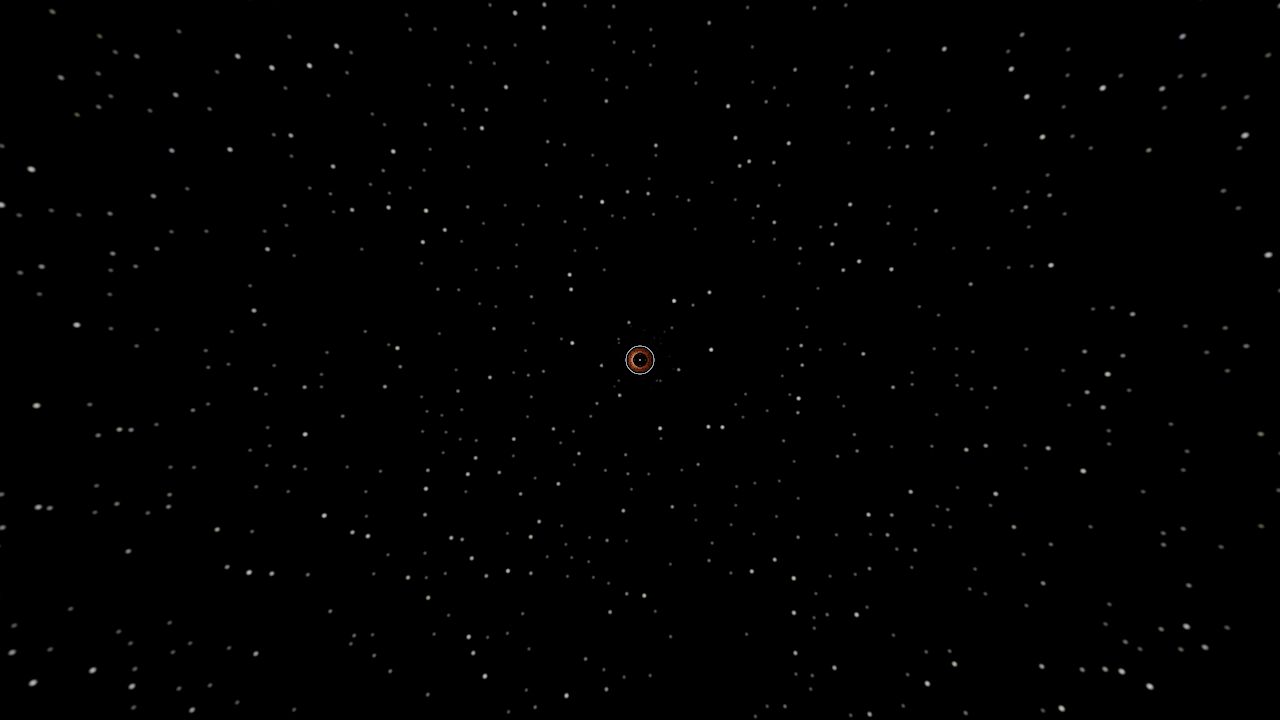
The dark disc that Vesper leaves on the sky is 184 km across for a hole without spin, a little wider than the horizon, which is 61 km across at Vesper's spin. Light that passes inside the shadow's edge is captured, and starlight just outside it is bent into a ring. physics
Free flight stops before this close approach and offers the separate horizon stage. The Into the Horizon ladder linked below supplies the detailed Schwarzschild view and an illustrative Kerr plunge.
Light that would just graze the horizon is not on a straight path, because the hole bends it. A ray is captured if it passes within about 2.6 Schwarzschild radii of the centre, and the horizon of a hole without spin sits at one. Why the hole looks like that derives the number and shows the ring.Why is the shadow wider than the horizon?a little geometry
103 ma view 1 km wide
A film segment
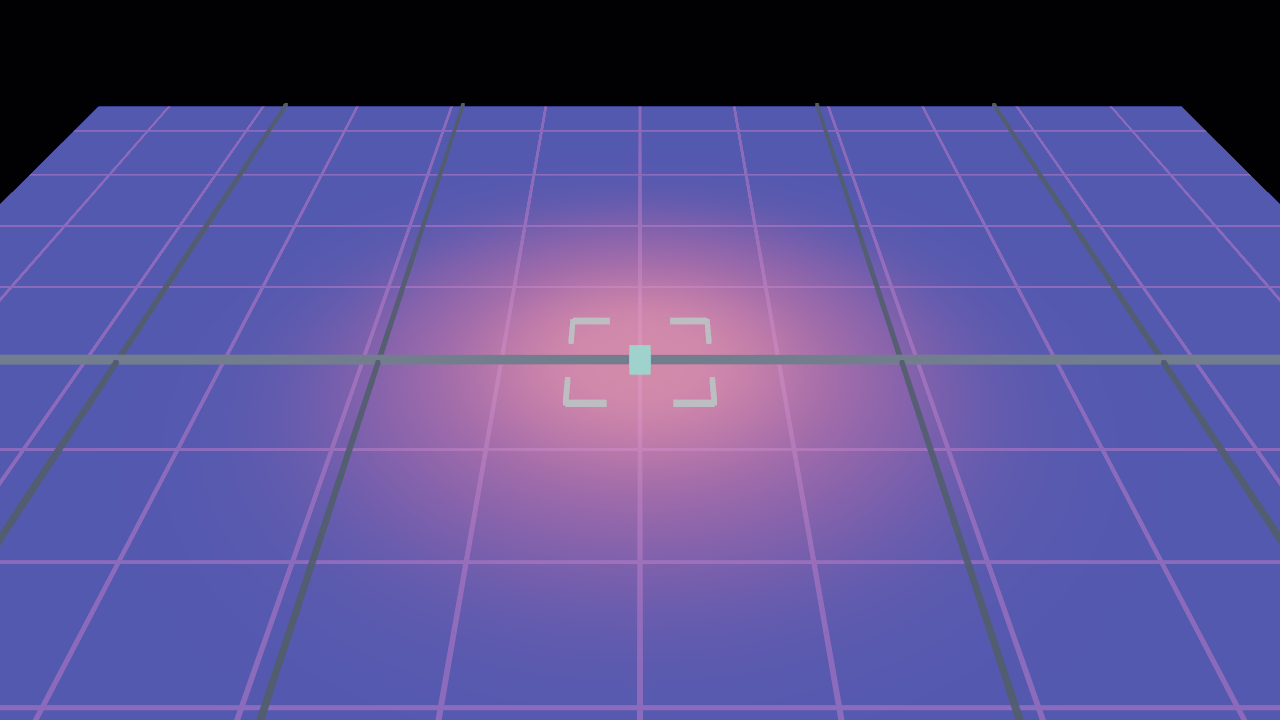
A radiator film is a spine 1,000 m long with wings, and one node sits at the hub of each segment. A segment carries 8 × 10⁵ m² of panel, and the node hands it 7.3 × 10⁴ W of heat to shed into the dark. This is the Vigil's unit of cooling, and cooling sets the size of everything else.
Heat has nowhere to go in space except as radiation, and a surface at 30 K radiates very little per square metre. A petawatt of waste heat needs a radiating surface of 43 Earths, so the films are the largest structure the Vigil builds physics. Cooling is the economy works through the numbers.Why does the heat go to a film?no math
In the sim's ledger Each node sheds 72.6 kW to its film.
101 ma view 10 m wide
One node
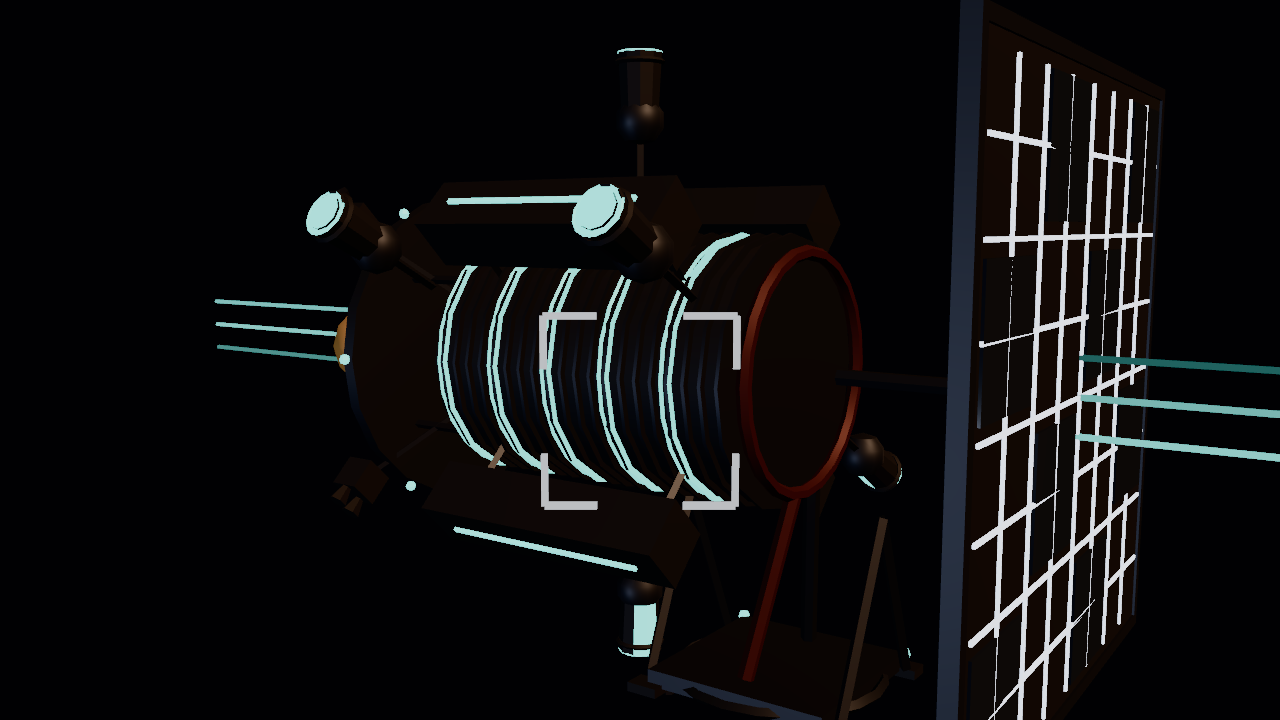
One node is a stack of logic tiles between cold plates, 6 m tall, small beside its film. It takes 1.1 × 10⁵ W of electrical power and sheds 7.3 × 10⁴ W to the film. It is hardware and nothing else, and it comes in four variants, described on the computing node page.
Light time. A mind spread over many nodes has to wait for its own signals, and the wait grows with the distance between nodes. The speed of light caps how large a mind can be before its parts stop acting as one physics. Big minds are slow minds has the numbers.What limits how big one mind can be?no math
In the sim's ledger Electrical power in: 113 kW.
100 ma view 1 m wide
Processor slab
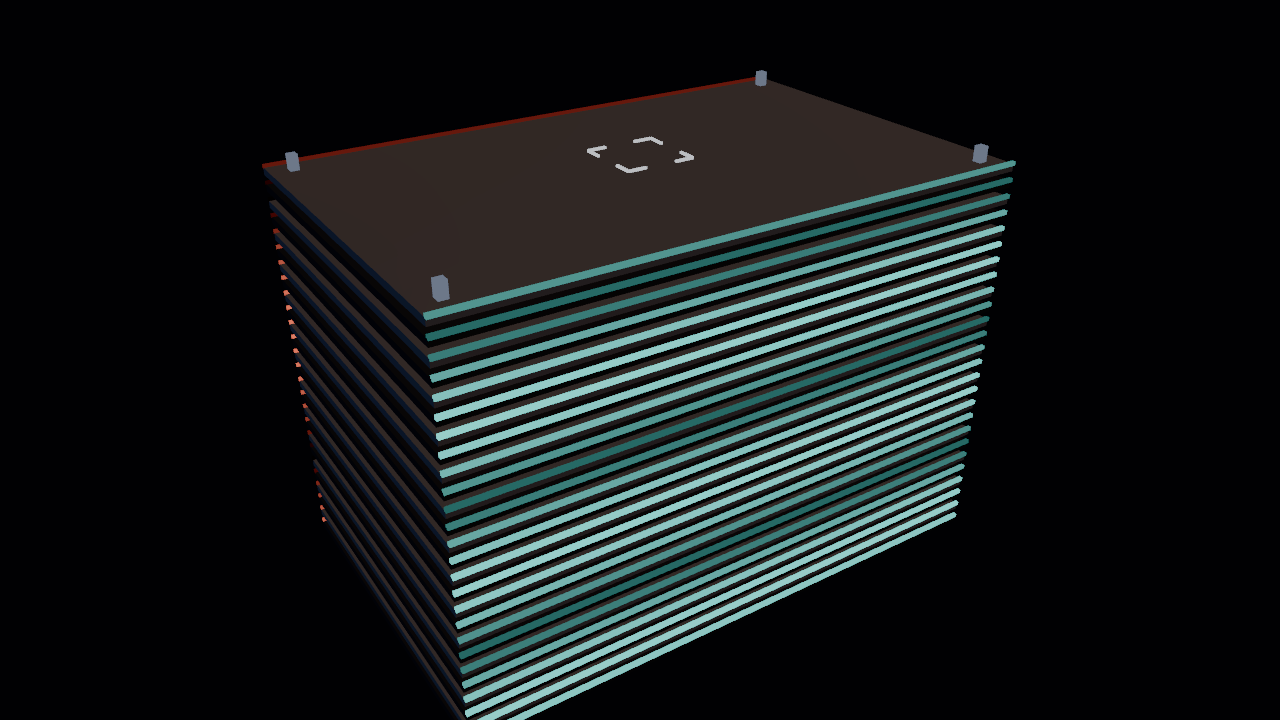
A slab is a metre of stacked logic with coolant running between the layers. It is the same stack seen close: tiles in layers, with a short path for heat to reach the plates. The sim draws the plates and their lit edges, and the count and spacing are illustrative design.
Distance costs time. A signal covers 30 cm in one tick of a 1 GHz clock, so logic packed into a small volume can act together, and logic spread out cannot (Big minds are slow minds). Stacking packs more of it inside that distance, at the price of getting the heat out of the middle physics.Why stack logic at all?no math
In the sim's ledger Heat per slab follows the swarm's ledger.
10−2 ma view 1 cm wide
Logic die
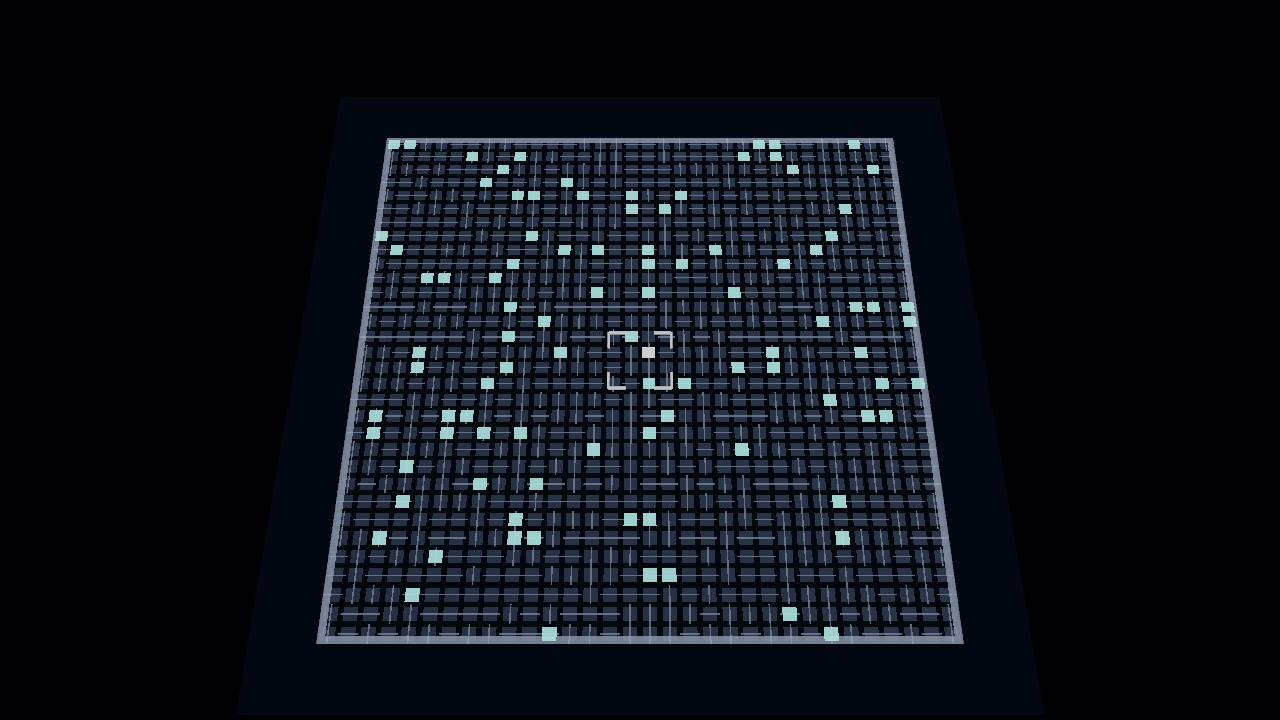
A die is a square of gate cells, the part you would cut from a wafer. A gate in the 2020s spent 1 × 10⁻¹⁶ to 1 × 10⁻¹³ J per switch, which is 3 × 10⁴ to 3 × 10⁷ times the cost of erasing one bit at room temperature physics. That floor is a limit, and how near hardware gets to it is an engineering matter challenge.
Erasing a bit releases at least kT ln 2 of heat, where T is the temperature of the surroundings. That is 2.9 × 10⁻²¹ J at 300 K and 2.9 × 10⁻²² J at 30 K, which is why the Vigil runs cold physics. The cost of forgetting derives it and lists the experiments that measured it.What is the floor?a single formula
In the sim's ledger One CMOS gate spends 3.5 × 10⁴ times the Landauer cost of a bit.
10−6 ma view 1 µm wide
Reversible gates
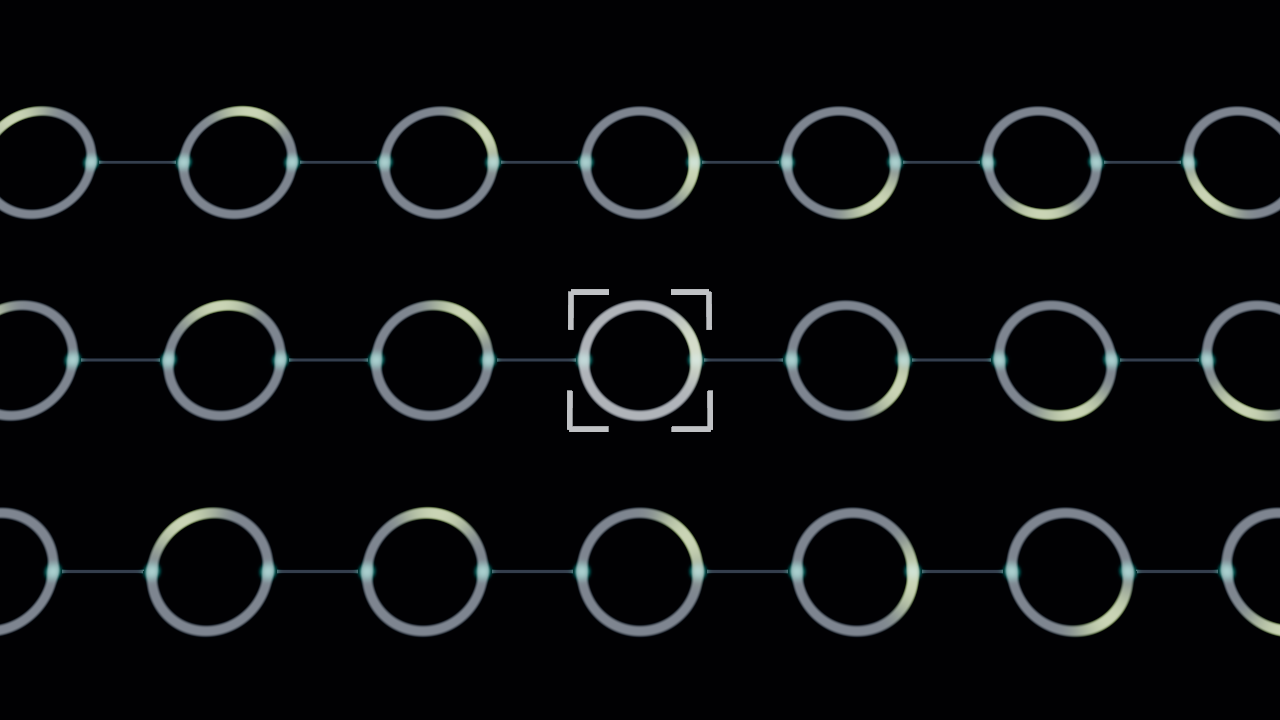
A reversible gate preserves enough information to undo its work. It avoids the mandatory Landauer contribution from erasing that information; hardware can still dissipate heat, and running backwards takes time. In 2013 adiabatic superconducting switching was measured at 1 × 10⁻²⁰ J per bit at 5 GHz, 3.5 times the room-temperature erasure floor physics. That measurement is not a complete reversible computer. Building one remains a challenge challenge.
The history has to be stored until the answer is copied out, and then run backwards to clear it. Storing costs memory and running back costs time, and the trade between them is a real limit on how much heat a reversible machine can avoid physics. Computing without forgetting covers the pebbling trade-off and where the heat comes back in.Where does the history go?no math
In the sim's ledger A cited AQFP example reports about 1.0 × 10⁻²⁰ J per bit at 5.0 GHz.
10−8 ma view 10 nm wide
One bit
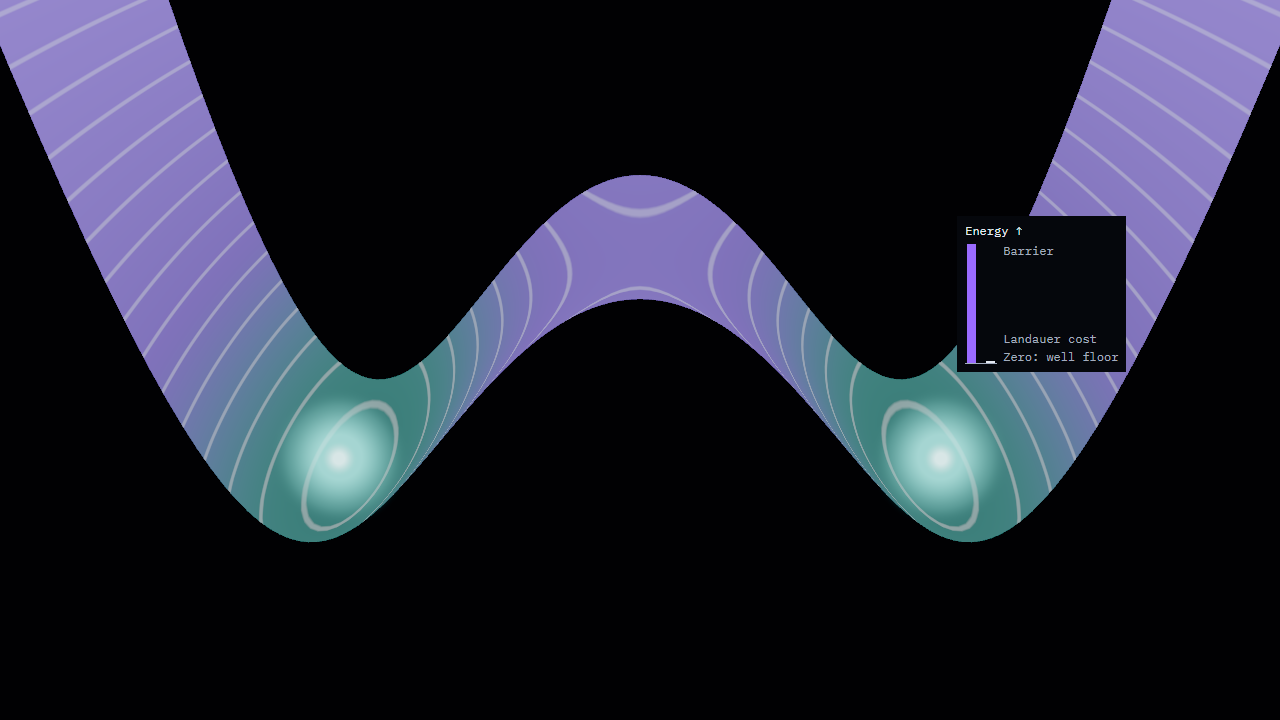
A bit is two stable states with a ridge between them. To hold it reliably the ridge must be many times the thermal energy kT: for a flip probability of 1 × 10⁻¹⁵ per operation it is 50 times the Landauer cost of one erasure illustrative. Erasing a bit at 30 K costs at least 2.9 × 10⁻²² J physics.
A simple thermal-error model makes the crossing probability proportional to e raised to minus the barrier over kT. Suppressing it to 1 × 10⁻¹⁵ gives a barrier near 35 kT illustrative. This stored barrier energy is distinct from the heat dissipated by a switching protocol. Landauer bounds erasure of information; it does not require every reversible switch to dissipate the whole barrier physics. The cost of forgetting explains the distinction.Why must the barrier be so much higher?a little statistics
In the sim's ledger Erase one bit at 30 K: 2.9 × 10⁻²² J. A reliable bit holds a barrier 50 times that.
10−10 ma view 100 pm wide
Electrons and atoms

An atom is about a tenth of a nanometre across, and the Bohr radius of the simplest one is 5.3 × 10⁻¹¹ m. Its electrons are not little balls on orbits. They are clouds of probability, and the sim draws them as density in shells and lobes. This is Barrow's fourth level, and the one the Vigil builds at, placing atoms exactly design. One joule can drive at most 6.0 × 1033 steps a second at any scale physics.
An electron bound to a nucleus has no path. The theory gives a probability of finding it at each point, and for the lowest state of hydrogen that is a smooth, round cloud. The sim's shells and lobes are stylised pictures of such densities, and they are not computed orbitals physics. How fast can anything think? explains the step limit.Why a cloud and not an orbit?no math
In the sim's ledger A system can switch at most 6.0 × 10³³ times a second per joule of available energy.
10−15 ma view 1 fm wide
The nucleus
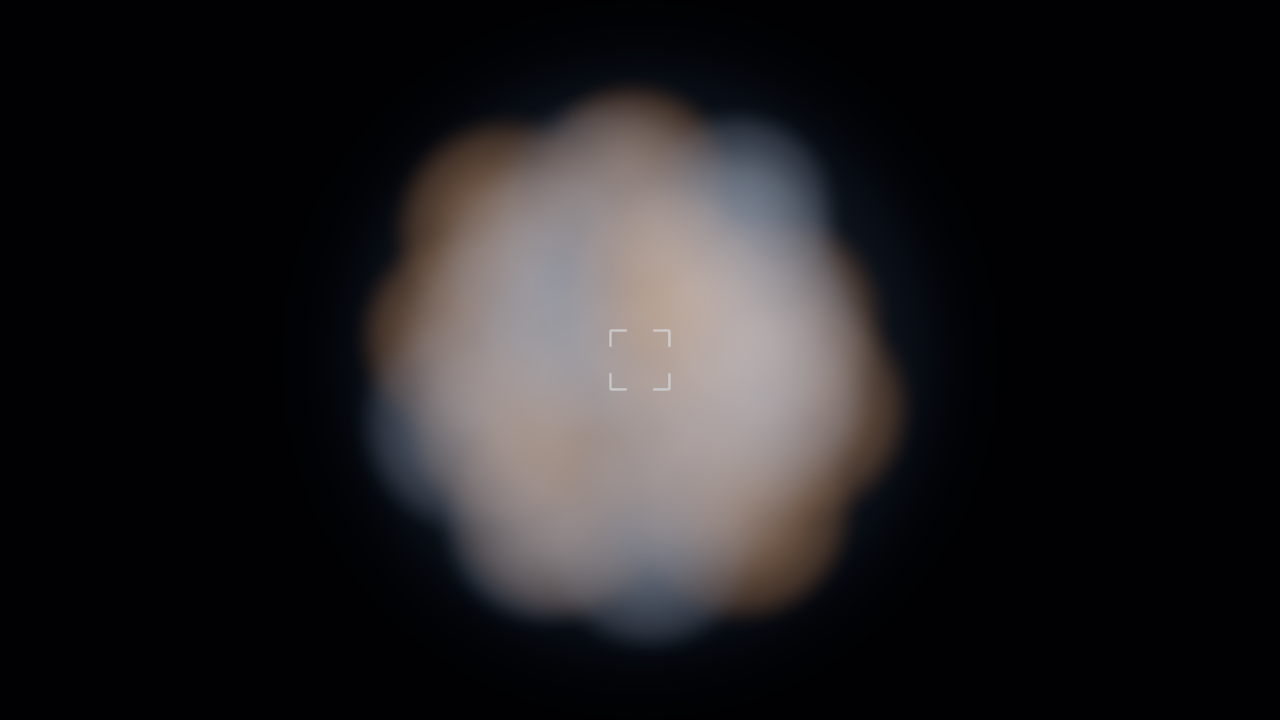
A nucleus is protons and neutrons packed to about a femtometre, held by the strong force. Barrow's fifth level asks whether anything could be built there, and that is unsettled: nobody has a design for logic made of nuclear matter frontier. Confining a particle to this size takes 3 × 10⁻¹¹ J. That is 7 × 10⁶ times an atom's energy scale, and it would allow switching in about 5 × 10⁻²⁴ s per operation.
Squeezing a particle into a length L gives it a momentum of at least about ħ/L, and at this size it is relativistic, so its energy is about ħc/L. Higher energy allows faster operations by the Margolus-Levitin bound, which makes a smaller scale attractive on paper and very hard to build on physics. The Barrow page does the arithmetic in full.Where does that energy come from?the uncertainty principle
In the sim's ledger Confinement energy 3.2 × 10⁻¹¹ J.
10−19 ma view 2.0 × 10⁻¹⁹ m wide
A quark
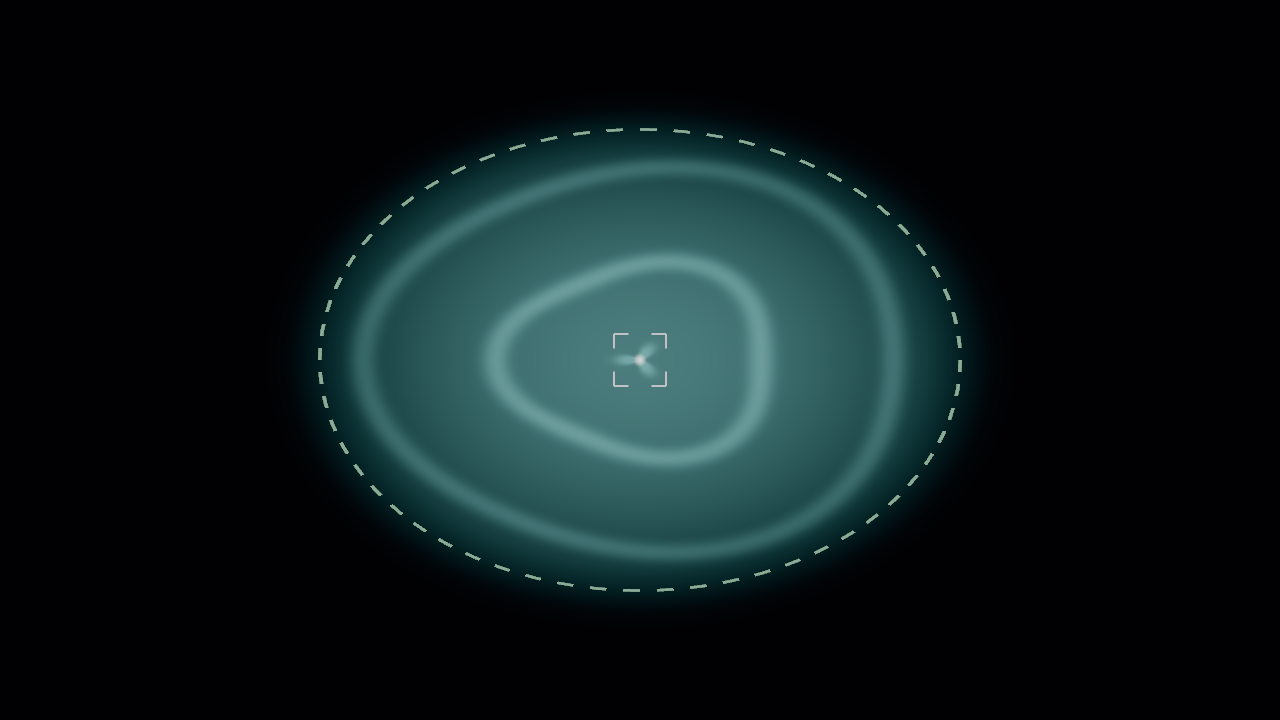
No one has measured a size for a quark. A one-teraelectronvolt probe, the scale of collisions at the LHC in the 2020s, resolves lengths of about 2.0 × 10⁻¹⁹ m. The sim draws a point inside a cloud of short-lived pairs, with a dashed ring at that resolution. The cloud is decoration for the vacuum, and the point has no measured size physics.
A probe of energy E resolves lengths of about ħc/E, so higher energy sees smaller things. At about two hundred megaelectronvolts that is a femtometre, the size of a nucleon, and at one teraelectronvolt it is the length above physics. The result is a resolution, not a measurement of how big a quark is. The Barrow page places quarks on the ladder as BVI.How does a probe's energy become a length?one formula
In the sim's ledger The Barrow level here is the particle: 2.0 × 10⁻¹⁹ m.
10−35 ma view 1.6 × 10⁻³⁵ m wide
The Planck scale
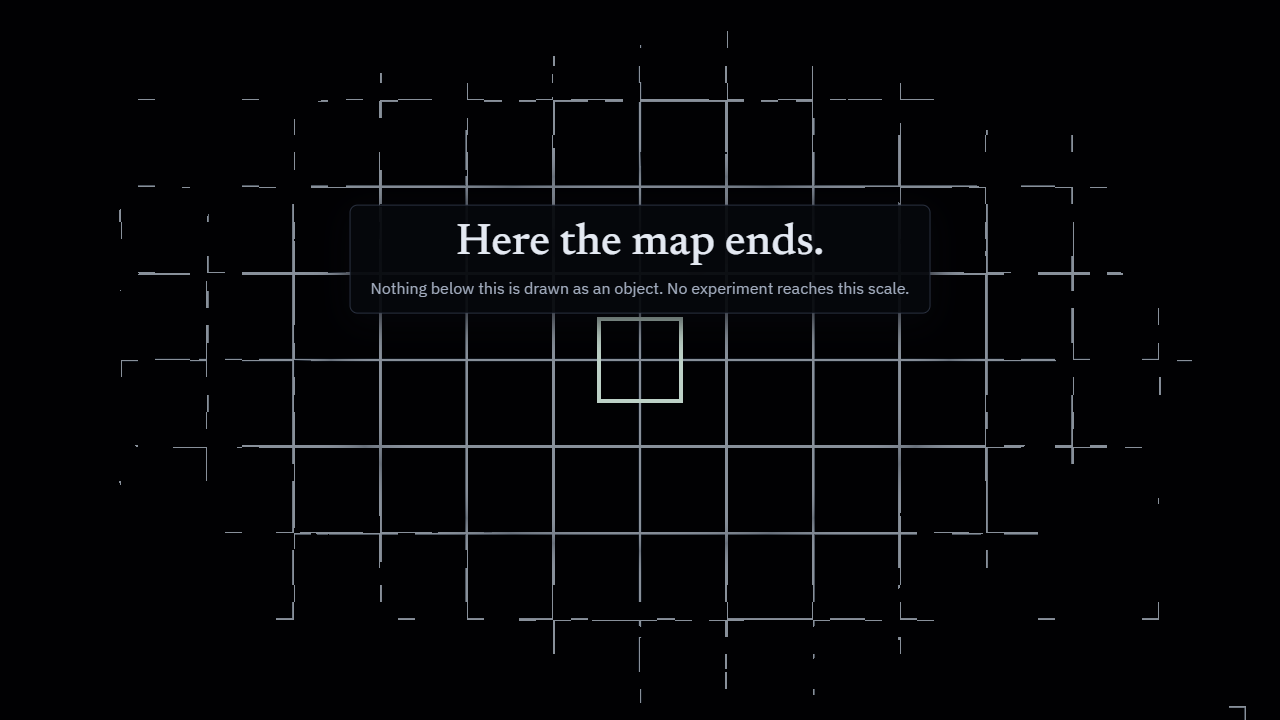
Known physics stops at the Planck length, 1.6 × 10⁻³⁵ m, which is built from three constants: ħ, G and c. No experiment reaches it, and the nucleus is still 20 orders of magnitude above it. The map ends here: the sim draws no object at this rung, only a grid that dissolves, because physicists do not agree on what space is made of at this size frontier.
It is the one length that ħ, G and c combine into, and it is where gravity's quantum effects are expected to become important. It also sets the count of bits on Vesper's horizon: the holographic bound allows one bit per 2.77 Planck areas of horizon, which gives 1.9 × 1079 bits for Vesper frontier. How much can a region remember? and The ultimate computer is a black hole explain why.Why does this length matter?dimensional analysis
In the sim's ledger Planck length 1.6 × 10⁻³⁵ m.
Where do the sizes and pictures come from?
The upper widths follow the model's galaxy, binary, band, body and shadow sizes, plus the definition of a light-year. The lower widths, Barrow levels, basis tags and ledger lines come directly from the live Barrow Ladder data. Every picture is a fresh sim capture at that rung's link; it remains a depiction with the assumptions stated in its caption. The galaxy backdrop is still illustrative. The links open the private dev build and require WebGPU.
Which sources stand behind the rungs?no math
Sizes of atoms, nuclei and the Planck length are standard constants, and the energy figures come from the pages linked on each rung.
- Barrow (1998), Impossibility: The Limits of Science and the Science of Limits, Oxford University PressThe ladder of civilizations ranked by the smallest scale they can manipulate, from BI to BΩ.
- Mohr, Newell, Taylor and Tiesinga (2025), CODATA recommended values of the fundamental physical constants: 2022, Reviews of Modern Physics 97The values of ħ, G, c and the constants the Planck length is built from.
- Navas et al. (2024), Review of Particle Physics, Physical Review D 110The reference tables for quarks and leptons, including the limits on any substructure.
- Landauer (1961), Irreversibility and heat generation in the computing process, IBM Journal of Research and DevelopmentThe original argument that erasing a bit releases heat.
- Ho, Erdil and Besiroglu (2023), Limits to the energy efficiency of CMOS microprocessors, arXiv preprintWhere the gates of the 2020s spend their energy, and how far they sit above the floor.
- Takeuchi, Yamanashi and Yoshikawa (2013), Measurement of 10 zJ energy dissipation of adiabatic quantum-flux-parametron logic using a superconducting resonator, Applied Physics LettersThe bit energy of an adiabatic superconducting gate, measured at about ten zeptojoules.
- Margolus and Levitin (1998), The maximum speed of dynamical evolution, Physica DThe proof that the steps a system can take each second are limited by its energy.
- Susskind (1995), The world as a hologram, Journal of Mathematical PhysicsThe holographic principle: one degree of freedom per Planck area of horizon.