Places
One stack of cold logic, in four kinds, small beside the films it sits among.
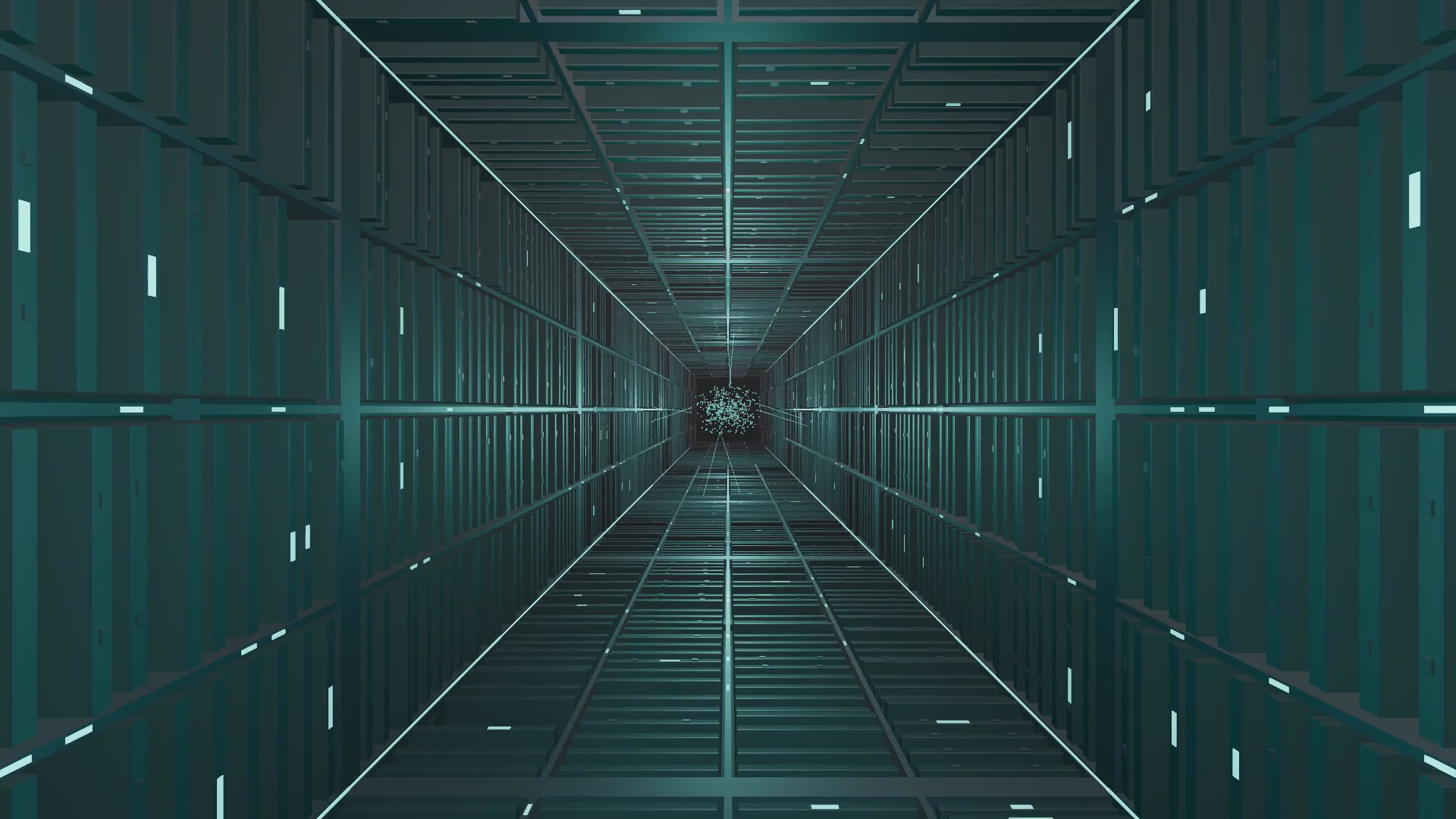
What is a node, and how big?
A node is the smallest unit of hardware in the swarm, one stack small beside the kilometre-scale films it works among. Every node comes in one of four variants design:
- General: ordinary logic at the hot end of the engine, 300 K.
- Reversible: logic that keeps its history instead of discarding it, so it pays the Landauer limit only when it forgets physics.
- Quantum: held at millikelvin, far colder than the 30 K films challenge.
- Archive: memory that holds the Record.
Each has a model in the catalog.
Why are nodes in zone C, and what limits them?
Nodes sit in zone C, between the collectors that make power and the films that shed the heat. Light time sets the problem. Nodes in zone C are seconds to minutes of light apart, so they cannot share one clock: a signal needs 50 to 200 seconds to reach the zone from Vesper, and 13 minutes to go across and come back physics. A single clock at 1 GHz only holds together over 30 cm. So each node keeps its own time and talks to others by messages physics.
Heat is the other limit. Forgetting one bit costs at least 2.9 × 10⁻²² J at 30 K, ten times less than at room temperature physics. That is the floor. A gate in the 2020s spent 1 × 10⁻¹⁶ to 1 × 10⁻¹³ J per switch, which is 3 × 10⁴ to 3 × 10⁷ times the floor. The floor is a limit, and how near hardware gets to it is an engineering matter challenge.
A node is also where a resident lives. A resident's state is about 1 × 1017 bits in the plan's illustrative case, within a range of 5 × 10¹⁵ to 1 × 10¹⁸ frontier. Minds as software on a node are a frontier claim, and the page makes no claim about what running one is like.
What does it teach?
The heat floor is in The cost of forgetting, and the way around it is in Computing without forgetting. The speed limit that comes from size is in Big minds are slow minds. The cold variant is explained in What a quantum computer is, and is not.